
What is the difference between substation and substation, and what are the functions of each?
Release time:
2022-03-30
Source:
Author:
Substation
Where the voltage is changed. In order to transmit the electric energy from the power plant to a distant place, the voltage must be raised to become high-voltage electricity, and the voltage must be lowered as needed near the user. The work of raising and lowering the voltage is done by the substation. The main equipment of a substation are switches and transformers.
According to different sizes, the small ones are called substations. Substations are larger than substations. Substation: generally a step-down substation with a voltage level below 110KV; Substation: including "boost and step-down" substations of various voltage levels.
A substation is a power facility in the power system that transforms voltage, receives and distributes electrical energy, controls the flow of power, and adjusts voltage. It connects power grids at all levels of voltage through its transformers. Substation in a specific environment; is the process of converting AC-DC-AC. Like submarine power cables and long-distance transmission. Some adopt the form of high-voltage direct current transmission and transformation. DC transmission overcomes the capacitive loss of AC transmission. Has energy saving effect.
The substation is mainly high-voltage substation medium voltage, or high-voltage substation low-level high-voltage, the substation occupies a large area, and the area is different according to different voltage levels and capacities, so some people call it a substation.
From the perspective of power supply economy, the substation should be close to the load center. From the perspective of production, the substation should not hinder production and transportation in the factory, and the transportation of the equipment of the substation itself should also be convenient. From a safety point of view, substations should avoid flammable and explosive places. The substation should be located on the windward side of the unit. In the enterprise, it is not easy to be located in places where dust and fibers are easily deposited. Substations should not be located in crowded places. The site selection and construction of substations should also take into account the requirements of fire fighting, corrosion prevention, pollution prevention, waterproofing, rainproofing, snowproofing, shockproofing and preventing small animals from penetrating.
Function: The substation is a transition device connecting the power plant to the user. Since the power plant is very far from the city and the factory where the electricity is used, and the voltage emitted by the power plant is not high, the current is very large. If the current is large, a large amount of heat will be generated on the transmission line according to Joule's law, which will cause Causes damage to the transmission line, and the conversion of current into heat energy is also a loss, so the voltage of the power plant needs to be raised through the substation to 500,000 volts, and then transported over a long distance to the cities and factories where we live, and then through the local substation. Reduce the voltage and compile it into our daily voltage of 220 volts through measures such as power distribution.
Substation
It is the place and place where the voltage is changed. It is the place where the voltage and current of electric energy are transformed, concentrated and distributed in the power system. In order to ensure the quality of electric energy and the safety of equipment, voltage adjustment, current control, and protection of transmission and distribution lines and main electrical equipment are also required in substations. According to the purpose, it can be divided into power substation and traction substation (for electric railway and tram). In the national standard GB50053-2013 "Code for Design of Substations of 20kv and Below", the term definition is "20kV and below AC power supply is transformed by a power transformer to supply power to electrical equipment", which conforms to this is the substation. .
Function: The substation is the place where the voltage and current of electric energy are transformed, concentrated and distributed in the power system. In order to ensure the quality of electric energy and the safety of equipment, voltage adjustment, control, transmission and distribution lines and main electrical equipment are also required in the substation. Generally, the voltage does not exceed one or two thousand volts. If it is directly transmitted over a long distance, the line current will be very large, which makes the power loss on the line very large, which is uneconomical, and the transmission power of the line is very low. So use a transformer to raise the voltage to tens of thousands or even hundreds of thousands of volts (depending on distance and power) to reduce line current. In order to connect power lines of different distances and powers into a grid to increase overall safety, multiple substations are required to match and connect lines of different levels. Similarly, after the high-voltage electricity is delivered to the destination, in order to meet the needs of different users, it needs to be depressurized. Generally, the main substation refers to the first-level substation, and there is a second-level substation.
Relevant Information
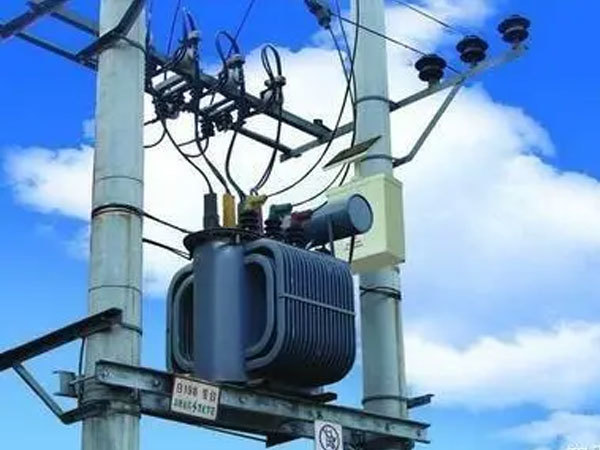
Why is it necessary to install noise controllers for transformers?
The sound of the transformer needs to be controlled, especially for the place where the transformer generates noise. Because the installation range of the transformer is relatively wide, the various uses of the transformer are relatively popular, and sometimes the installation position of the transformer is not correct. , bringing inconvenience to many residents and communities. At this time, the noise of the transformer must be controlled. Installing a controller for the noise of the transformer can solve this problem. How is the noise controller installed for the transformer?
2022-03-30


The main function and performance requirements of transformer oil
(1) Insulation effect: Transformer oil has a much higher dielectric strength than air. The insulating material is immersed in oil, which not only improves the dielectric strength, but also protects it from moisture.
2022-03-30
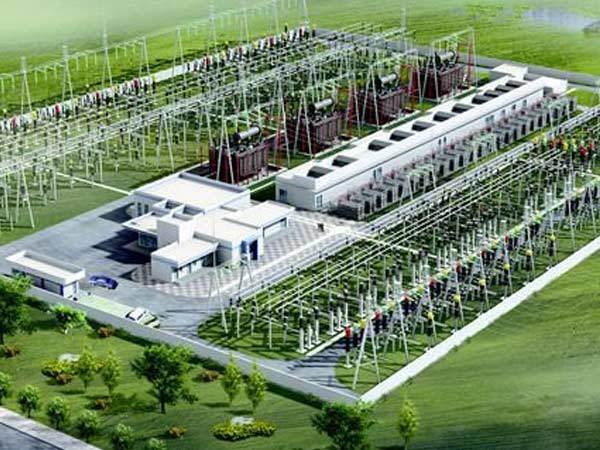
Does the substation have radiation and what is the safe distance?
Substations do not generate electromagnetic radiation, but electromagnetic induction. 110kv substation safety distance is 15 meters (front) and 12 meters side).
2022-03-30
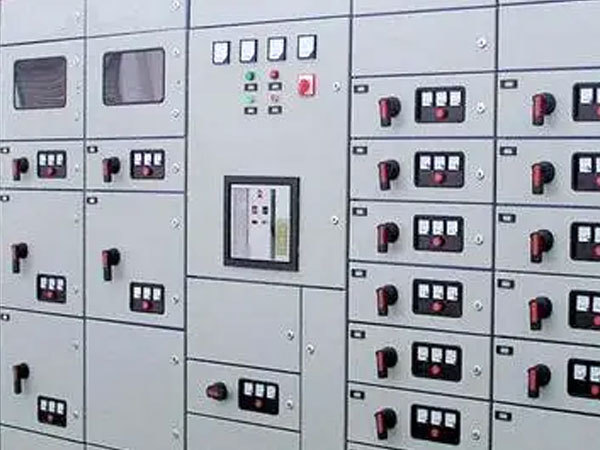
How to choose the switch cabinet?
The switchgear is mainly divided into fixed type and trolley type, and its structure is divided into open type, semi-closed type and closed type. In terms of use environment, there are indoor and outdoor, electromagnetic working mechanism, spring working mechanism and manual working mechanism. So, how should we choose the required switchgear?
2022-03-30
Links:
Contact
Address1: North Section of Longteng Road, Tai'an High-tech Zone, Shandong, China
Service hotline: 0086-538-6611222
Sales phone: 0086-538-893268
Website: https://www.elolam.com.cn
Email: elolam@126.com
